We have reached part three of our interview series with IntegPartner’s founder, Lasse Ramquist. The previous articles highlight the power of organizational self-organization and the importance of joining forces behind a shared narrative about the future. In this final part, Lasse explains how blind spots, individual “mental fences,” and a lack of humility within leadership teams can create devastating trust gaps between managers and employees.
We begin with Lasse Ramquist touching on the very heart of modern leadership – the relationship to reality. He claims that “most leadership teams are not in contact with reality.” At first glance, this may sound deliberately provocative, but Lasse insists it is a deeper insight rather than a harsh accusation.
“It’s a deliberate provocation to make people reflect. But in truth, it’s self-evident. A leadership team naturally only has access to a small fraction of the knowledge needed to run a complex organization. No leadership team can have full control – knowledge is distributed among everyone in the organization, but relevant knowledge also resides with external actors, customers, suppliers, and partners. That’s why leadership must find a way to mobilize and integrate all this collective intelligence.”
We do not see reality as it is – but as we are
But Lasse argues that this is only part of the challenge. Even more fundamental is the insight from modern cognitive science: human beings never have full access to the entirety of the reality around us. We constantly filter the enormous stream of information we’re exposed to, perceiving only what evolution has deemed necessary for our survival and success.
“Our senses work like a cockpit instrument panel for a pilot flying in the dark. It shows just enough to navigate – but not everything that’s out there. In the same way, our perceptions and interpretations are simplified models of reality.”
This filtering protects us from overload but also creates what Lasse describes in his book as “mental fences” – invisible and unconscious boundaries shaping what we perceive as relevant, true, or possible. Our experiences, education, and roles shape our perspectives, and over time we risk becoming blind to what’s right in front of us.
“Within a mental fence, I only see a limited part of reality – and I don’t even realize the fence exists. It’s like walking around with sunglasses without knowing it – the world just appears a little brownish.”
When success makes us blind
These mental fences exist everywhere – in everyday life, in project teams, and at the highest levels of leadership. Lasse refers to the collapse of the mobile phone industry as a clear example:
“Ericsson, Nokia, and Motorola didn’t see that what they called a mobile phone would soon be an obsolete product. Success made them blind to what lay outside their mental fence. Meanwhile, Apple with the iPhone had already identified the possibilities – and revolutionized the way we interact with the world.”
For leaders, acknowledging their own limitations is not easy. The higher up you go, the harder it becomes to accept that others often hold critical pieces of knowledge about reality – pieces you as a leader may not even be aware exist. It is very hard to manage the stuff we don’t even know that we don’t know.ious, and truly listen. If I feel threatened as soon as someone asks a tough question, the risk is that the strategic dialogue turns into a one-way defensive speech,” says Lasse.
When mental fences create friction in everyday work
These invisible boundaries show up not only in grand strategic decisions – they shape everyday operations in the organization. When an engineer, project manager, or specialist works from a limited viewpoint, crucial connections can be lost. Small decisions early in a process can lead to major, unwanted consequences later – in production, delivery, or the customer experience.
“This is rarely about lack of interest or competence – it’s about not knowing what you don’t see. We all operate within our own mental fences and therefore lack access to the knowledge found elsewhere in the system.”
When information and understanding don’t flow freely between functions, unnecessary friction arises – design errors, rework, quality issues, and missed opportunities. Only when the organization begins to dismantle its mental fences and build shared pictures of reality can collaboration become truly effective.
“That’s why we talk so much about collaboration bridges. Only when we see the whole together can we make wise decisions – not just in our own box, but for the entire system.”laborating in a team that pulls in the same direction, succeeding in customer deliveries, and experiencing personal growth while being part of a winning team.
Humility – the real superpower
“You need a journey toward humility to understand the value of listening. Daring to ask for help is the single most important success factor. Only others can help me see beyond my own mental fence,” says Lasse.
Humility – the ability to listen, invite, and trust others – becomes not a sign of weakness but of leadership maturity. Those who understand their limitations can build trust, open dialogue, and create the conditions for collective learning.
Bridging the trust gap
Many organizations face a major challenge: a growing trust gap between leadership and employees. Lasse describes it as a “Grand Canyon” of misunderstandings, assumptions, and untapped potential.
“At IntegPartner, our work often centers on building bridges across that gap. We help leadership teams and employees start talking to each other again – not just in terms of strategy and goals, but about reality as it is actually experienced from different perspectives. When those viewpoints meet, energy emerges.”
And precisely there – in the meeting of humility and collaboration – new contact with reality is formed. A reality that no individual can fully grasp, but that everyone together can navigate.
Five Fundamentals for a Successful Collective Effort
- Dare to ask everyone for help – Pinpoint the strategic questions where everyone must contribute and direct collective energy accordingly.
- Build an infrastructure for strategic dialogue – Create a forum where leadership and employees meet, and where joint momentum can be formed and renewed.
- Involve and engage everyone – Make space for ideas, questions, and perspectives to navigate today’s unpredictable environment together.
- Strategic drive meetings for all – A recurring forum to build energy, vitality, and progress through creative teamwork at every level.
- Dare to distribute real power – Give people more freedom and mandate to take necessary decisions to contribute fully based on their local expertise.
Read part one of the series.
Read part two of the series.
Buy Lasse Ramquist’s book Kraftsamla: involvera alla för framgång i en oförutsägbar värld.
Sustainable results start with people who thrive and collaborate – want to learn how? Get in touch with us at IntegPartner.
Cases
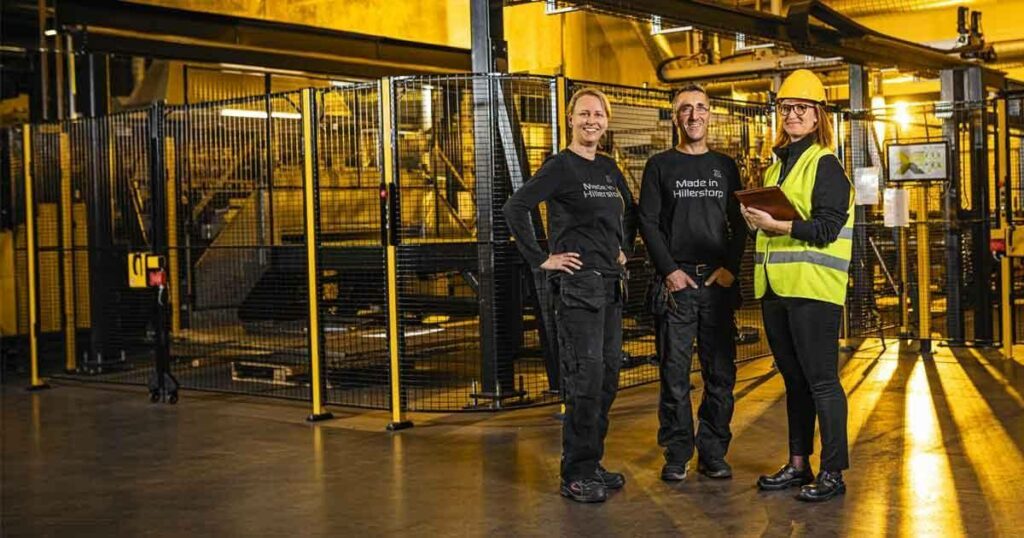
Axelent – How we helped the management team unite, the entire organization handle internal conflicts, and reduce sick leave.

Increased Sales and Customer Satisfaction at NOBIA – UK Kitchen Provider Magnet

How Seco Tools turned challenges into success with Integral Management

Finding the full potential in Nobia’s factory in Eggedal